
NZSL Beginner Level 1
Our Beginner Level 1 Certificate Program offers a structured pathway through foundational skills, designed to build upon each level progressively.
Progression Requirements: Complete each level in order.
Level 1 → Level 1B → Level 1C → Level 1D. (After Level 1D, you can enroll in Intermediate courses.)
Level
1
Beginner
Outcomes:
Foundations of NZSL; culture and community; concepts > words; facial expressions; everyday phrases.
Format:
6–7 weekly classes (60–90 mins).
Includes:
Practice sheets, video examples, tutor feedback.
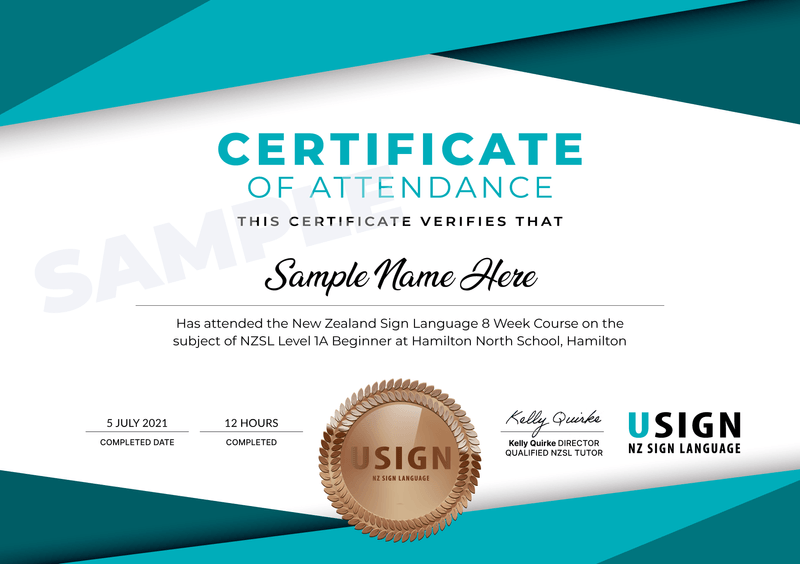
Course Completion Certification:
Beginner 1 – Bronze
Beginner Level 1 Certificate
E-certificates are awarded upon completion of each level, provided you attend at least 80% of the sessions.
Important Notes:
These are non-credit courses aimed at personal and professional development. All courses are accessible to learners of all backgrounds.
Course Structure:
NZSL Level 1A – Unit 1-3
Introduction to core concepts. Required to progress.
Introduces basic vocabulary and simple phrases, focusing on greetings and everyday expressions, with an emphasis on visual communication and non-manual signals.
Unit 1: Meeting and Greeting
-
Exchange greetings and make introductions
-
Understand simple online class instructions
-
Learn about the role of facial expression in NZSL
-
Learn to get, and give, eyegaze before signing (requirements for visual attention)
-
Learn numbers 1–10
-
Learn the fingerspelling alphabet, spell their own name, and ask for repetition
Unit 2: Our Class
-
Identify people in the online class
-
Name language(s) they are learning
-
Give and follow simple instructions and action commands
-
Ask for clarification, correction, and confirmation
-
Ask and tell where something is in the room
-
Use appropriate phrases for arriving late to online class
-
Use numbers for counting (0–20) and simple time phrases in relation to class activities
Unit 3: Needs and Wants
-
Name common food and drink items
-
Make and respond to requests and offers for basic wants and needs
-
Ask and tell locations of familiar objects and locations in the immediate environment
-
Express likes and dislikes
-
Understand basic signs about emergency exit procedures
NZSL Level 1B – Unit 4-5
Expands on Level 1 with practical applications.
Expands vocabulary related to personal information and daily activities. Learners practice forming simple sentences and engaging in basic conversations.
Unit 4: Family and Friends
-
Tell about immediate family/whānau and relationships (e.g., friends, colleagues)
-
Give and ask personal information about self and others, such as where one lives and their pets
-
Use numbers for counting, age, ranking
Unit 5: Everyday Activities
-
Communicate about simple home and leisure daily routines and activities
-
Express feelings about activities
-
Use calendar and clock time phrases
NZSL Level 1C – Unit 6-7
Further develops knowledge from Level 1B.
Deepens understanding of NZSL grammar and structure, introducing storytelling and topics like hobbies and interests, enhancing expressive and receptive skills.
Unit 6: Small Talk
-
Start conversations with known and unknown people
-
Make compliments (e.g., appearance, clothing) and congratulations
-
Ask and tell about general wellbeing, health, and everyday life
-
Discuss the weather
-
Close a conversation
Unit 7: Community and Work
-
Communicate about essential services and locations in their community (e.g., doctor, bank, library)
-
Describe occupations, tasks, and transport in relation to work and community activities
-
Negotiate appointments and bookings
-
Discuss prices on use of services and purchases, and ways of payment
NZSL Level 1D – Unit 8-9
Final stage before transitioning to Intermediate courses.
Focuses on complex dialogues and descriptive language. Learners refine signing skills and gain confidence in using NZSL in various social contexts.
Unit 8: My Place
-
Invite others, accept and decline invitations to their home
-
Give and ask for addresses and contact details (e.g., email, mobile number)
-
Describe identifying features of their home (e.g., two-storey, brick, white fence)
-
Understand and give simple directions to their homes
-
Identify rooms in the house
-
Name essential household items relevant for visitors (e.g., meals, toilet paper)
Unit 9: Events and Celebrations
-
Communicate about events, celebrations, and holidays
-
Talk about destinations (places) and modes of travel
-
Describe and discuss plans
-
Make interruptions (e.g., to ask a third person for information or suggest a different idea)